The Bale Mountains in Ethiopia rise to more than 4,000 meters and form the largest Afroalpine landscape on the continent – sometimes described as part of the “Roof of Africa.” Archaeological evidence shows that prehistoric hunter-gatherers visited these highlands repeatedly over tens of thousands of years. One particularly well-documented episode dates to around 15,000 years ago, when small groups used the mountains during a time of major environmental change.
This period marked the end of the last glacial phase. Glaciers in the Bale Mountains were retreating, exposing newly ice-free plateaus and valleys. At roughly the same time, East Africa entered the African Humid Period, a wetter climatic phase that brought increased rainfall across much of the region. Together, these shifts created new opportunities for human activity in the highlands.
A particularly clear picture of this episode comes from three precisely contemporaneous archaeological sites – a rare situation in archaeology. At Dimtu, currently the highest known archaeological site in Africa, people produced distinctive pointed flakes on a high plateau that had only recently become ice-free. Nearby Simbero yielded standardized backed tools, suggesting careful toolmaking and the use of handles or shafts, while Webi Gestro produced small blades used for cutting and other processing tasks. Taken together, these sites show that small groups carried out different, task-specific activities across distinct Afroalpine landscape units, moving between plateaus, valleys, and rock shelters.
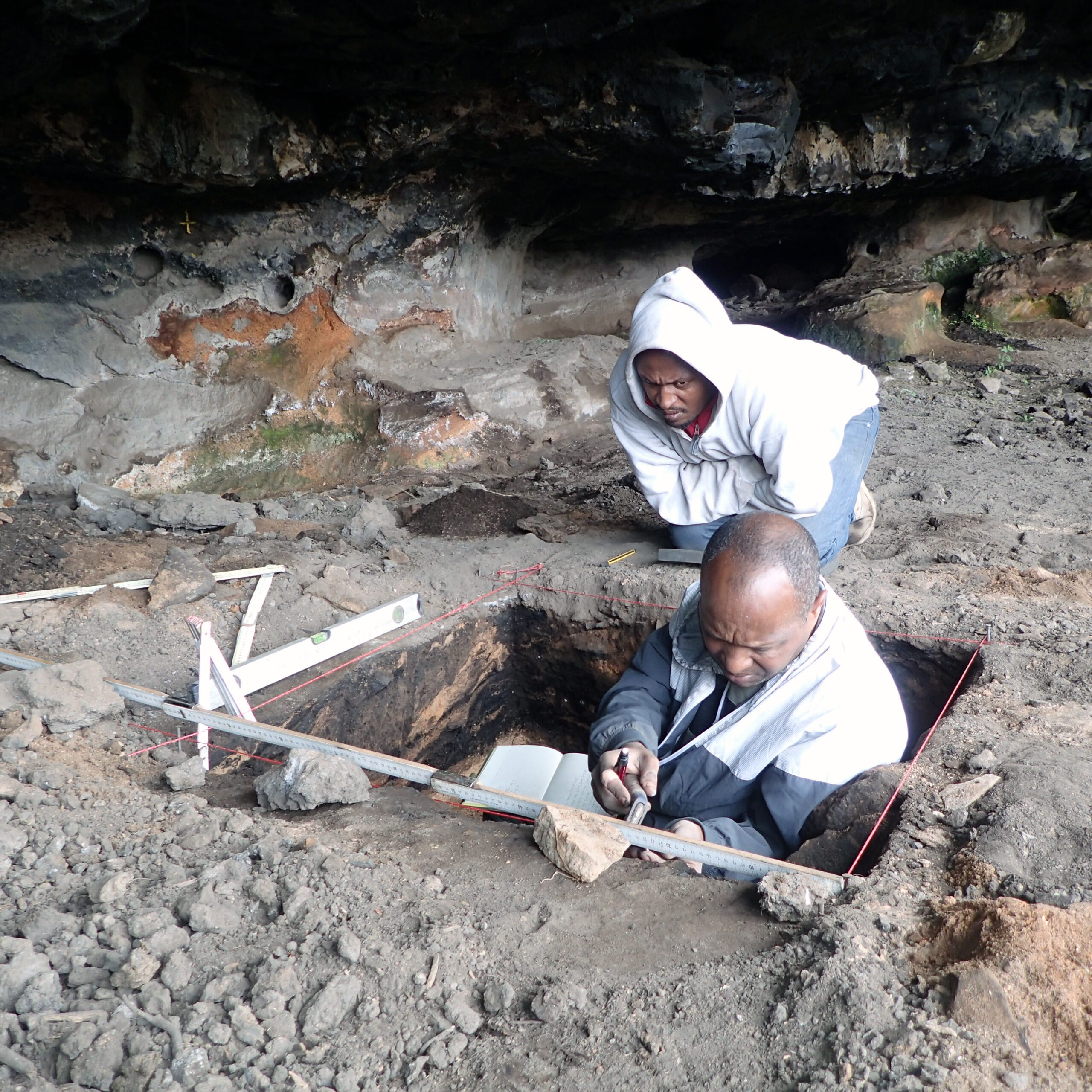
Co-author Minassie Girma Tekelemariam and colleague at work. Photo Credit: Götz Ossendorf
Many of the tools were made from obsidian, a volcanic glass prized for its sharp edges. Chemical analyses indicate that this obsidian originated from lowland sources, showing that the people using the Bale Mountains maintained deliberate social and exchange networks linking highlands and lowlands.
Together, these discoveries show that even Africa’s highest landscapes were part of active human worlds. The Bale Mountains were not an isolated wilderness – they were places people returned to repeatedly as climates shifted and communities organized their movements, resources, and relationships across the landscape.
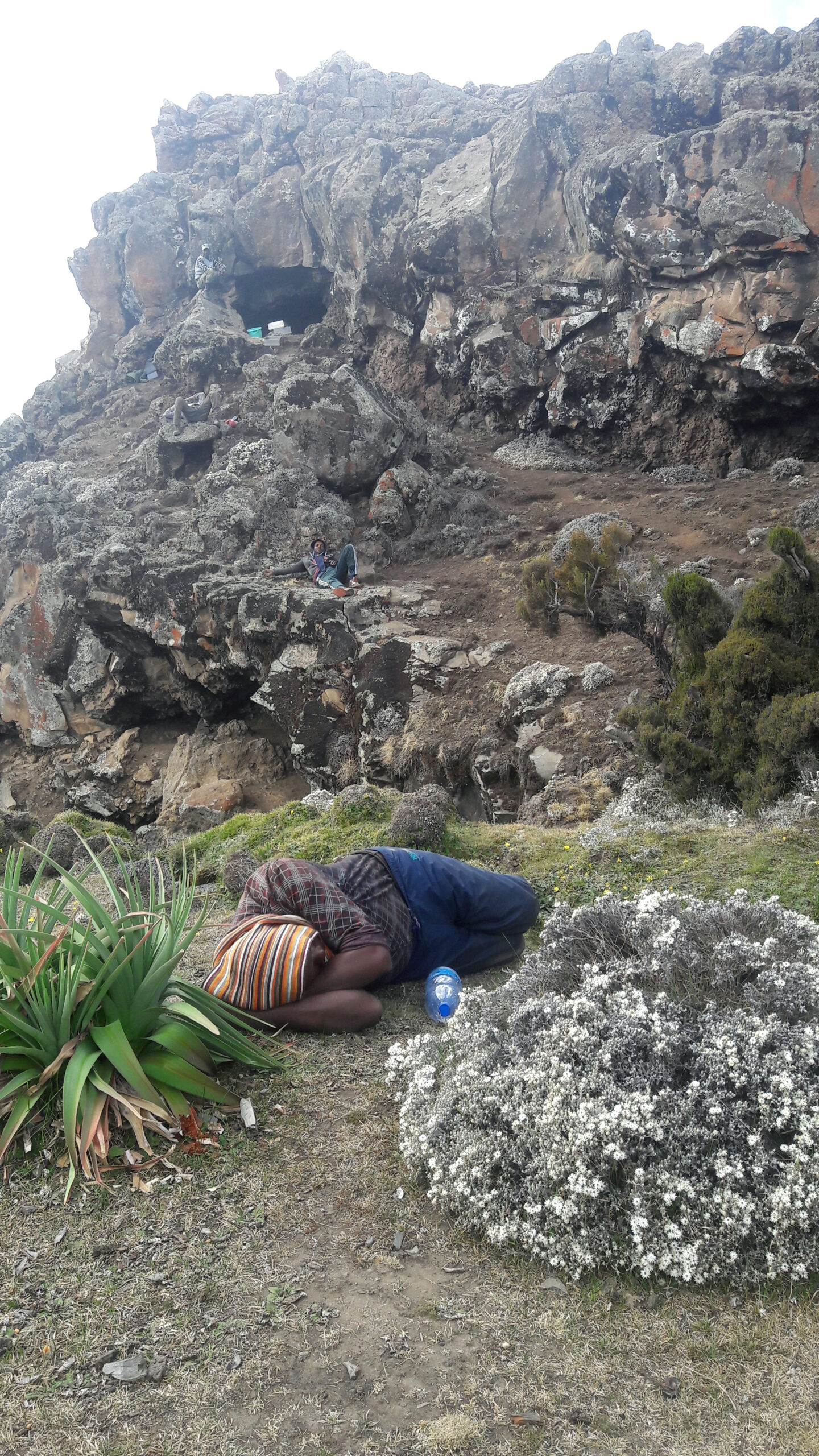
Short break at Dimtu Rockshelter. Can you spot the three characteristic Afroalpine plants? Photo Credit: Götz Ossendorf